Activation through platform differentiation
TikTok became more activation-oriented through recurring drops, launch dates and direct purchase cues, while Instagram moved more strongly toward ambassadors, community and identity.
Marketing · Consumer Insight · Strategy · Film
I turn that understanding into strategy, growth and storytelling, drawing on experience across consumer research, digital marketing, premium brands and visual culture.
A curated selection rather than an archive: research, decisions, campaigns and stories.

Consumer Research · Brand Perception
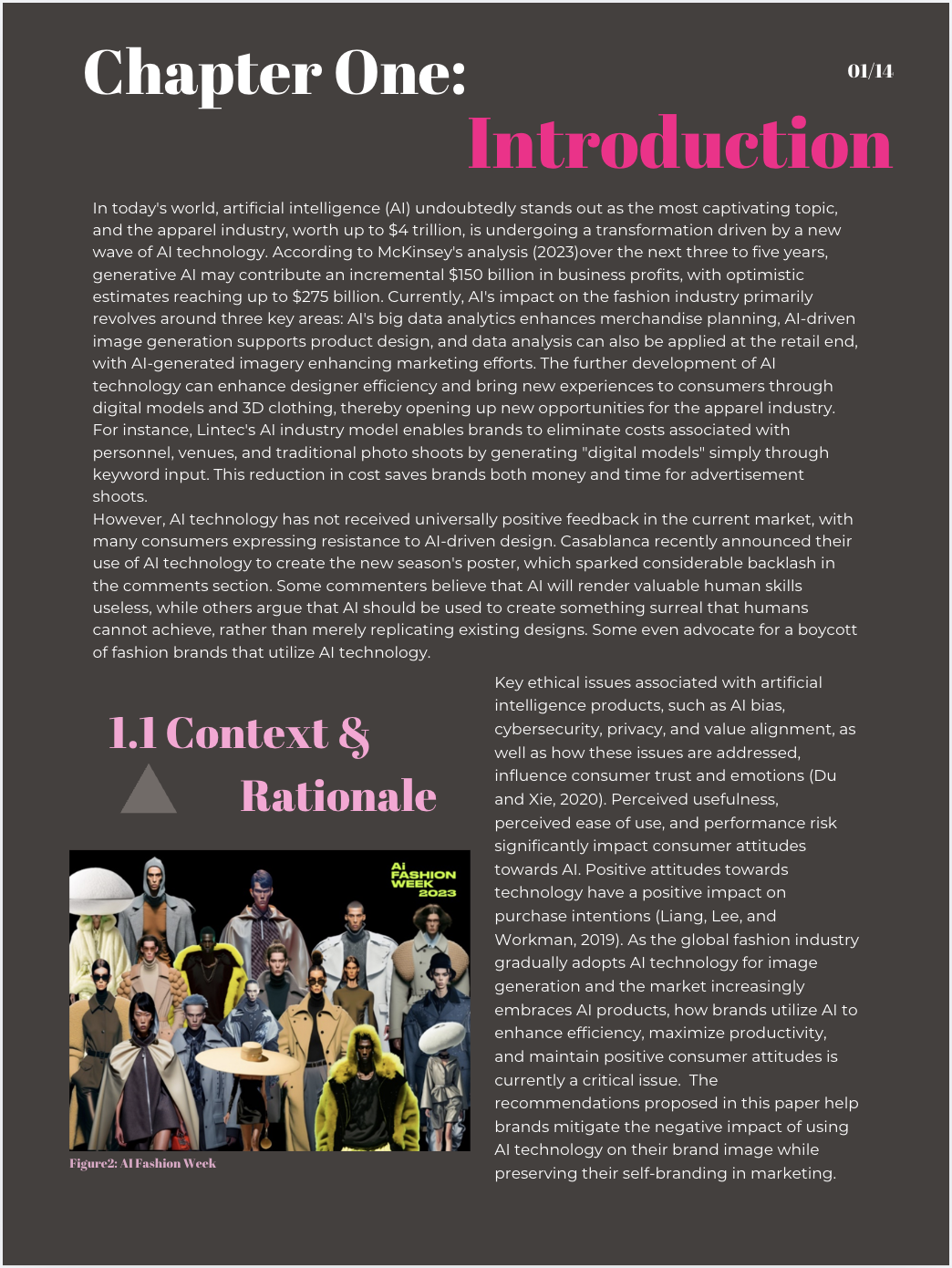
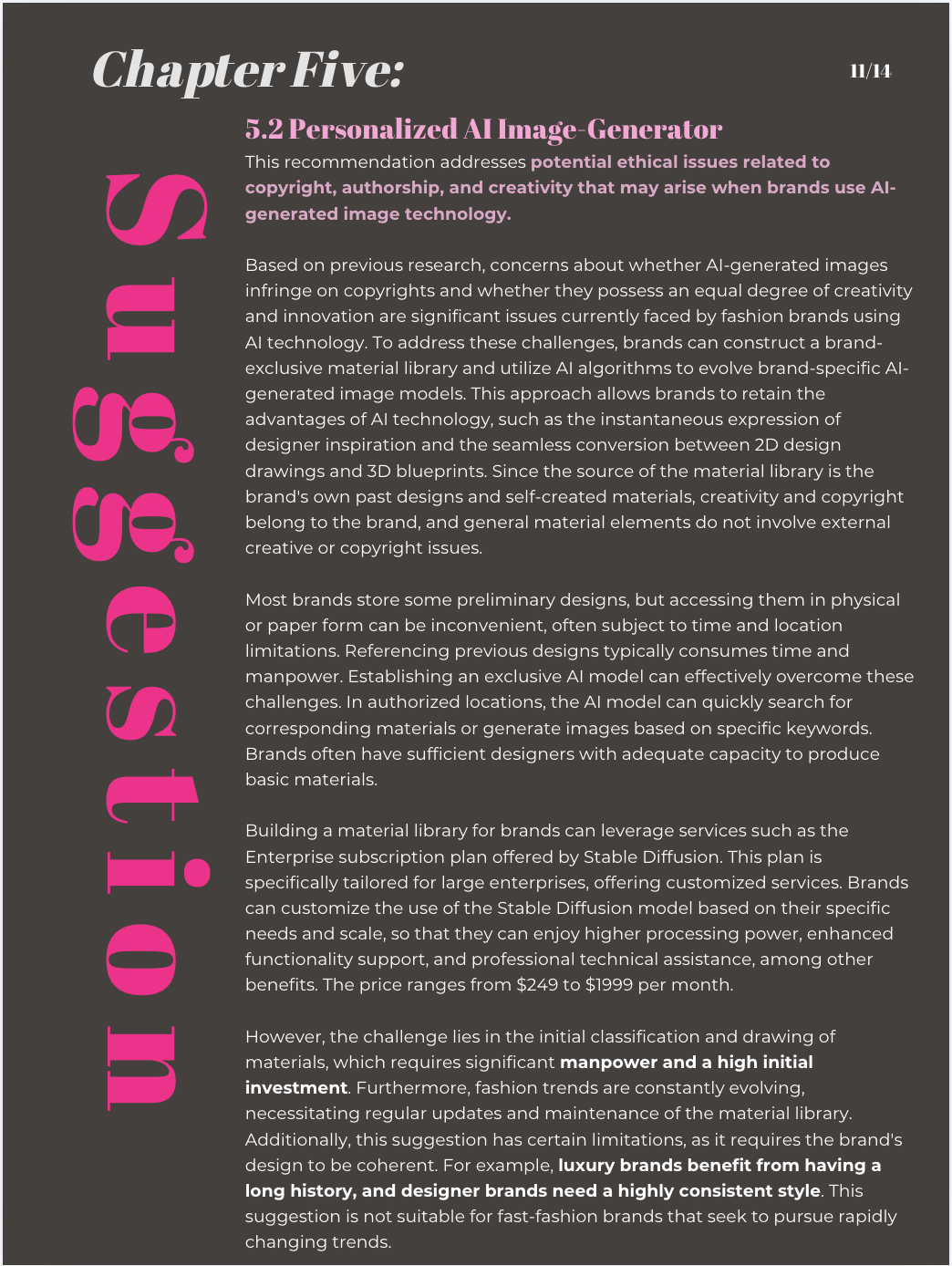
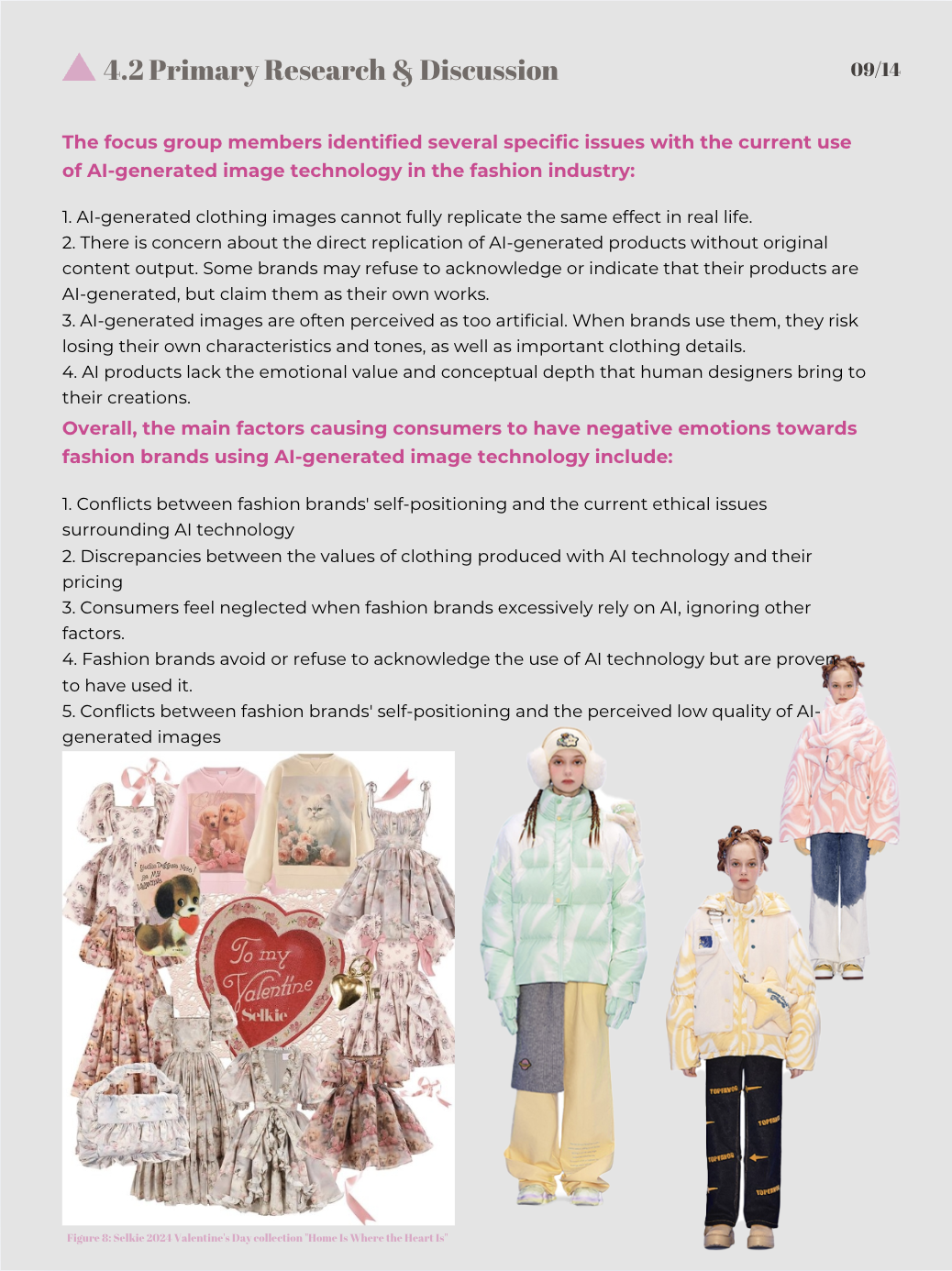
I studied how consumers respond to AI-generated fashion imagery — and found that resistance depends less on AI itself than on what consumers believe the brand is supposed to be good at.
View case → 02
Growth Marketing · Creator Strategy
I managed 40+ creator collaborations and used early organic performance to decide what was worth amplifying — connecting creator selection, content signals and sales outcomes.
View case → 03
Brand Strategy · Cultural Context · Academic Concept
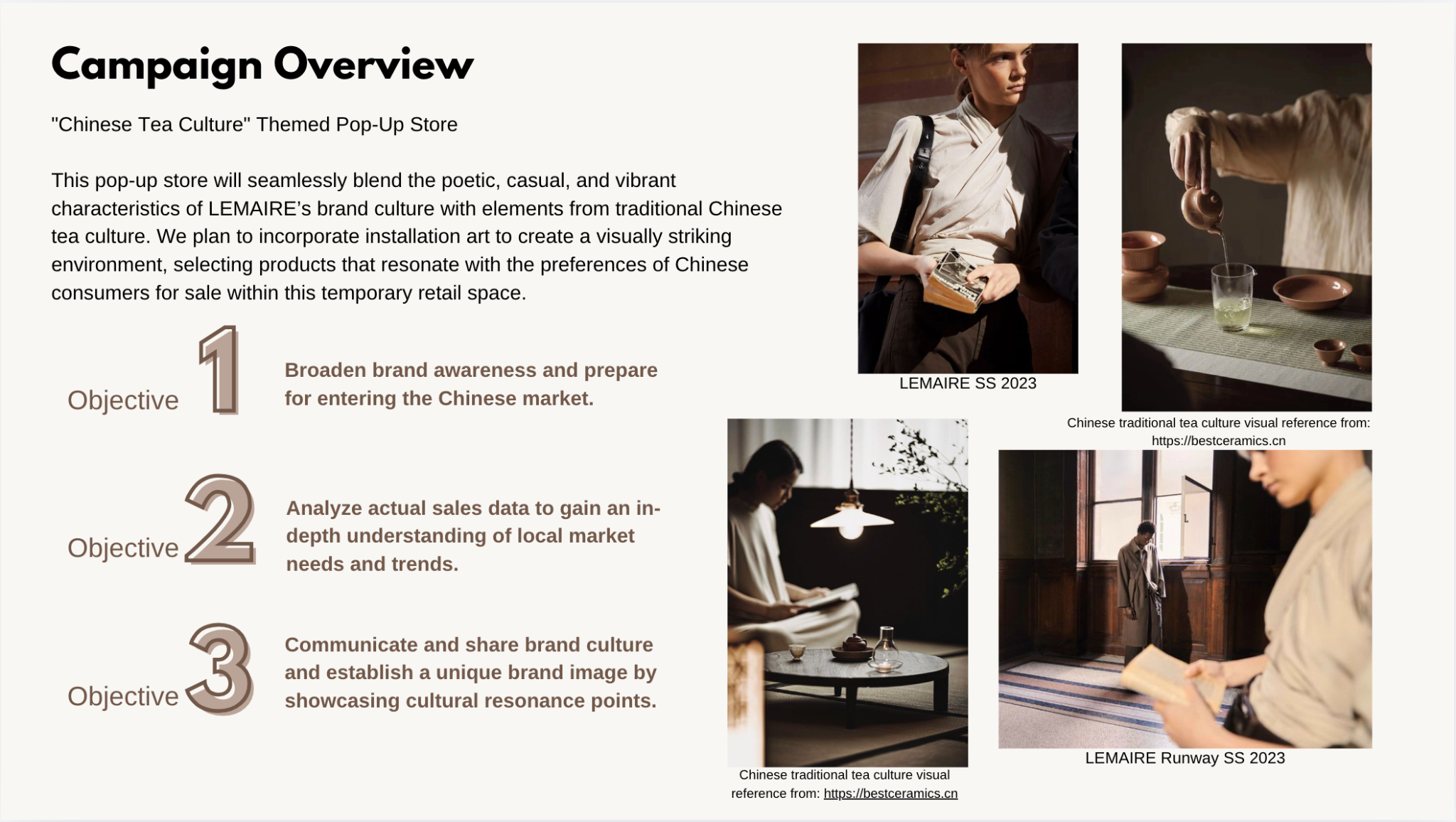
An academic concept exploring how LEMAIRE could enter Shanghai through Chinese tea culture, from positioning and customer experience to campaign planning.
View case → 04
Consumer Research · Digital Strategy
I analysed 344 Instagram and TikTok posts across Lululemon, Arc’teryx and Patagonia to examine how commercial messages can sit inside long-term relationship-building.
View case →Long-form documentary work — field research, interviews and edit.

Documentary · Jingdezhen · Traditional Craft
A field documentary following the making of Linglong porcelain through process, place and the hands behind the craft.
Watch / read → 02
Documentary · Intangible Heritage · Material Culture
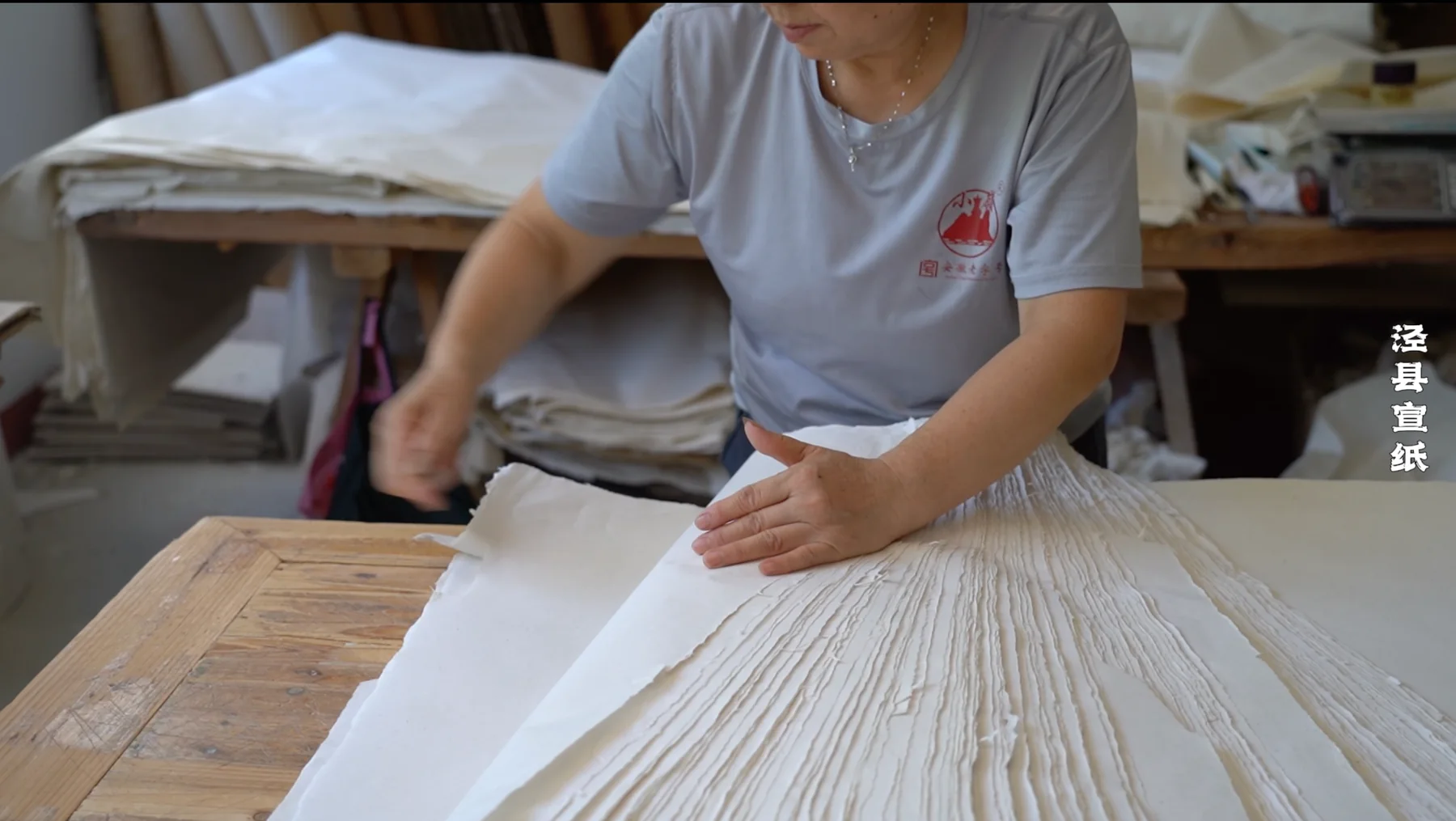
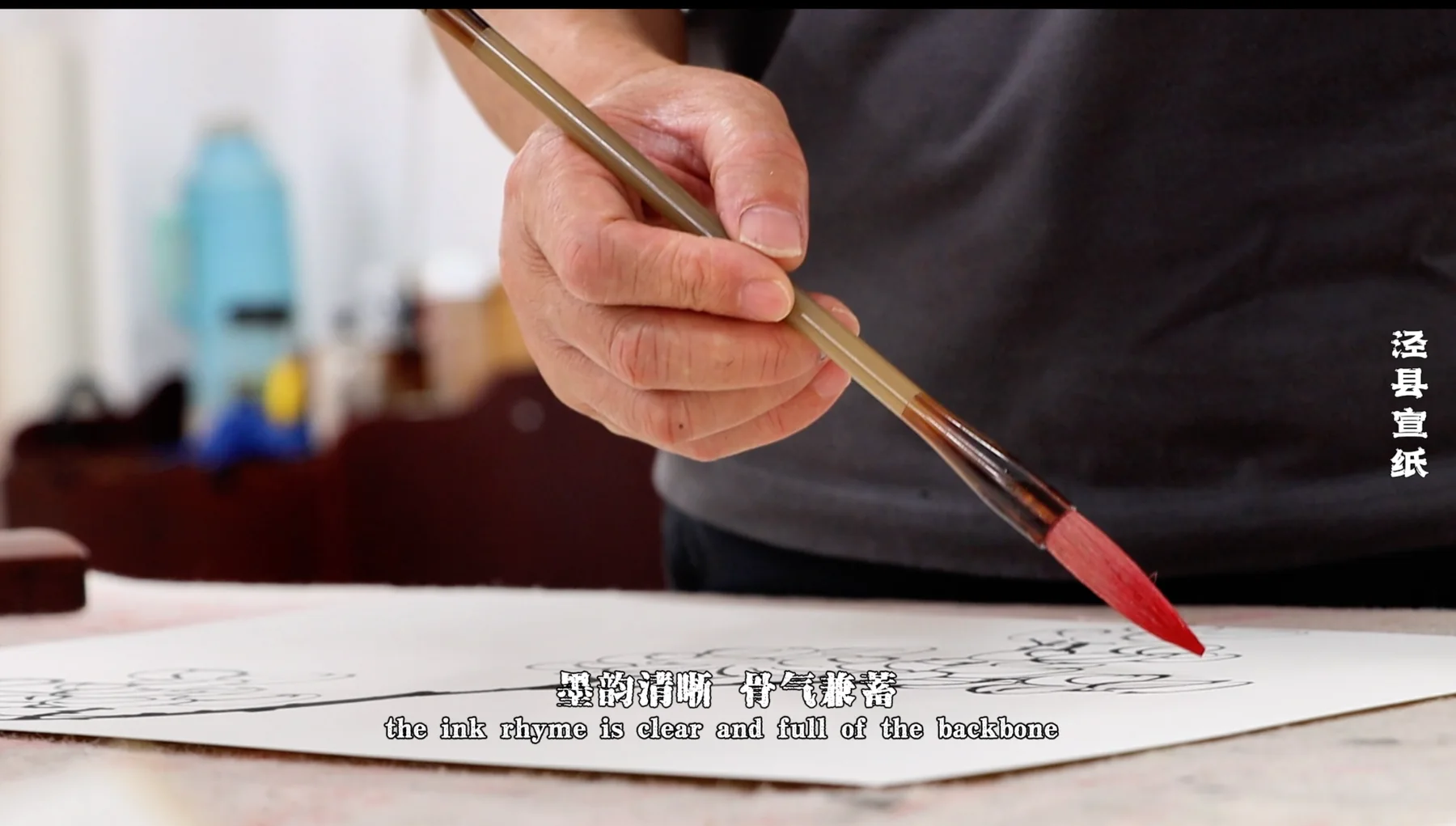
A documentary tracing Xuan paper from handmade production to its cultural life as a material for writing, painting and preservation.
Watch / read →Work
Projects are organised by the question they answer, not by a rigid “research / marketing” split. Each case uses the same structure so the portfolio stays easy to maintain.

Consumer Research · Brand Perception
I studied how consumers respond to AI-generated fashion imagery — and found that resistance depends less on AI itself than on what consumers believe the brand is supposed to be good at.
View case → 02
Growth Marketing · Creator Strategy
I managed 40+ creator collaborations and used early organic performance to decide what was worth amplifying — connecting creator selection, content signals and sales outcomes.
View case → 03
Brand Strategy · Cultural Context
An independent retail concept exploring how LEMAIRE could build greater cultural relevance in China through a shared language of ritual, materiality and pace.
View case → 04
Brand Strategy · Social Media · Content Analysis
I analysed 344 Instagram and TikTok posts across Lululemon, Arc’teryx and Patagonia to examine how commercial messages can sit inside long-term relationship-building.
View case →Consumer Research · 2024
Generative AI × Fashion × Brand Perception
An independent study exploring how consumers respond to AI-generated imagery in fashion — and why acceptance changes with brand positioning, pricing and the role creativity plays in the product itself.

AI is not automatically “good” or “bad” for a brand. The more useful question is: when does its use conflict with what consumers think they are paying for?
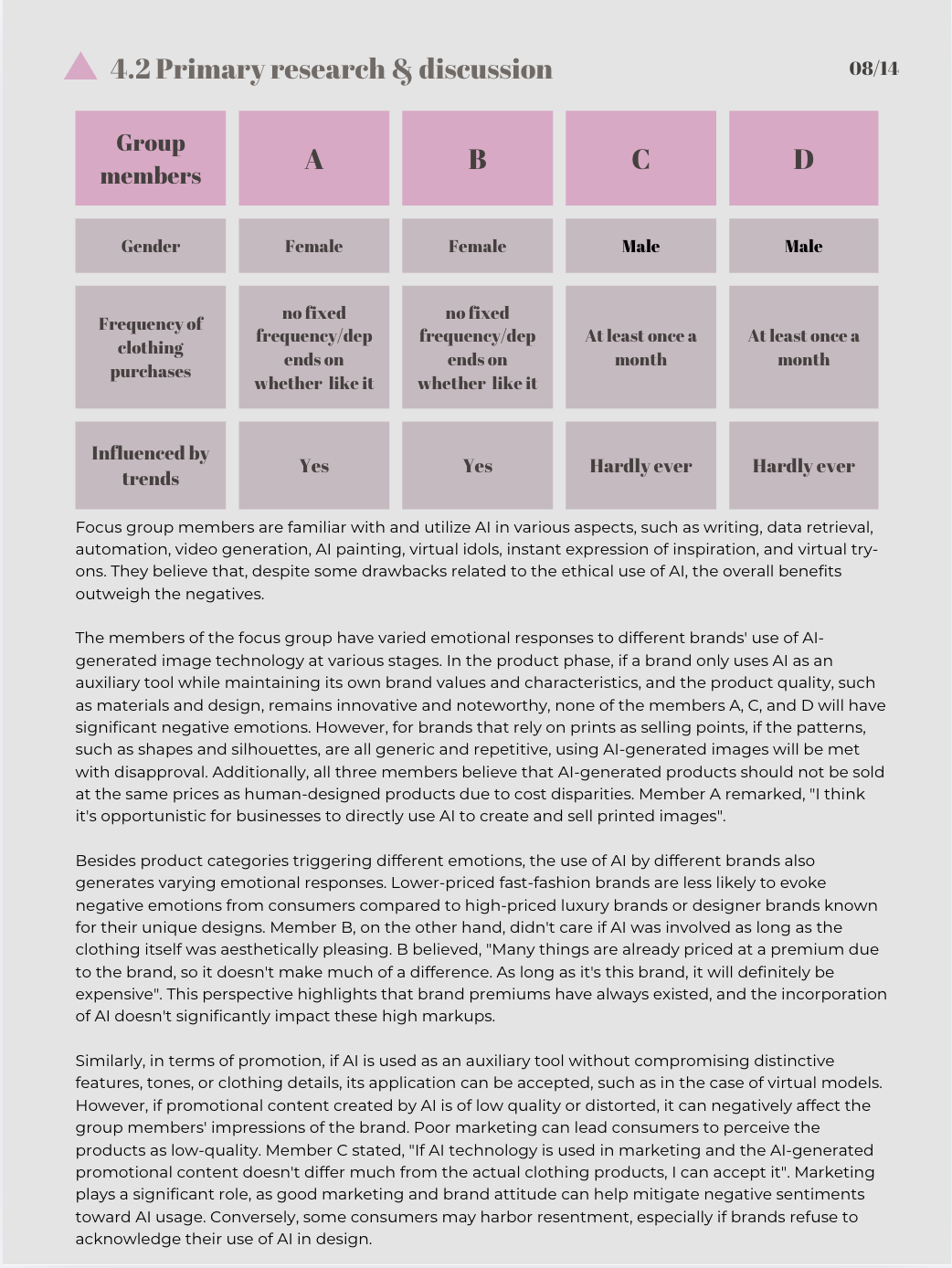
The project examined consumer attitudes and emotions toward AI-generated imagery in fashion, including its use in product design and promotional content.
The research combined secondary research on AI use in fashion with a focus group of four fashion consumers selected to reflect differences in gender, purchasing behaviour and interest in technology.
Rather than treating attitudes toward AI as a simple positive–negative divide, I compared how participants responded to different uses of AI across product design, promotional imagery and brand communication.

Acceptance depended less on the technology itself than on whether AI displaced the brand’s perceived source of value.
Creativity changed the reaction.
When artistic prints, original design or collaboration were central to the product’s value, AI use triggered stronger resistance.
Context changed the reaction.
When AI acted as an auxiliary tool in promotion or non-core visual work, acceptance was more neutral if quality and brand character were maintained.
Price changed the reaction.
Consumers questioned paying a human-design premium when they believed creative or production effort had been reduced.

The closer AI sits to a brand’s core creative promise, the greater the reputational risk.
Brands should therefore use AI selectively. Applications in non-core visual or promotional work may carry relatively low risk when product accuracy and brand identity are preserved. But when originality, craftsmanship or human creativity are part of what consumers believe they are paying for, AI requires a much clearer strategic justification.
Brand Strategy · Social Media · Content Analysis
Lululemon · Arc'teryx · Patagonia · Instagram & TikTok
I analysed 344 Instagram and TikTok posts across Lululemon, Arc'teryx and Patagonia to understand how premium brands introduce commercial objectives without abandoning long-term relationship-building.
The pattern was not a shift from “relationship” to “selling”. Each brand commercialised through the communication logic it had already built.
How do premium brands pursue short-term commercial objectives without abandoning the relationship-building communication that supports long-term brand meaning?
I compared Lululemon, Arc'teryx and Patagonia because they occupy adjacent premium lifestyle and outdoor markets while building brand meaning differently — through community, technical expertise and environmental purpose.
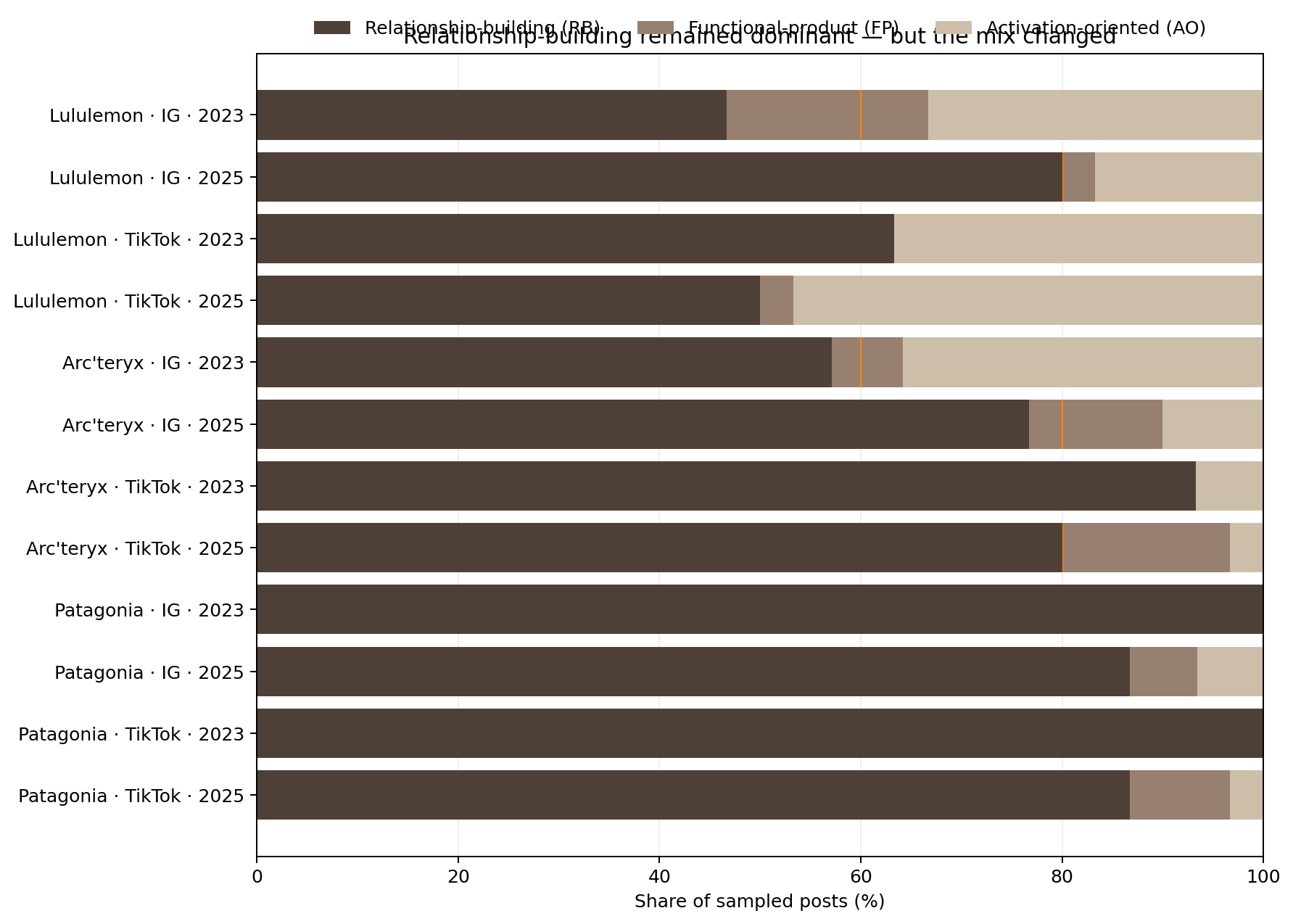
I manually collected and coded 344 posts across twelve brand-platform-period units.
Each post was assigned a primary communication orientation — relationship-building, functional/product-led or activation-oriented — while overlapping cues were coded separately. This allowed commercial signals inside otherwise relational or functional content to remain visible.

Commercial pressure did not erase brand identity. It was absorbed through it.
Relationship-building remained the dominant primary orientation across all twelve comparison units. Commercialisation appeared instead through different combinations of product visibility, activation cues and existing brand narratives.

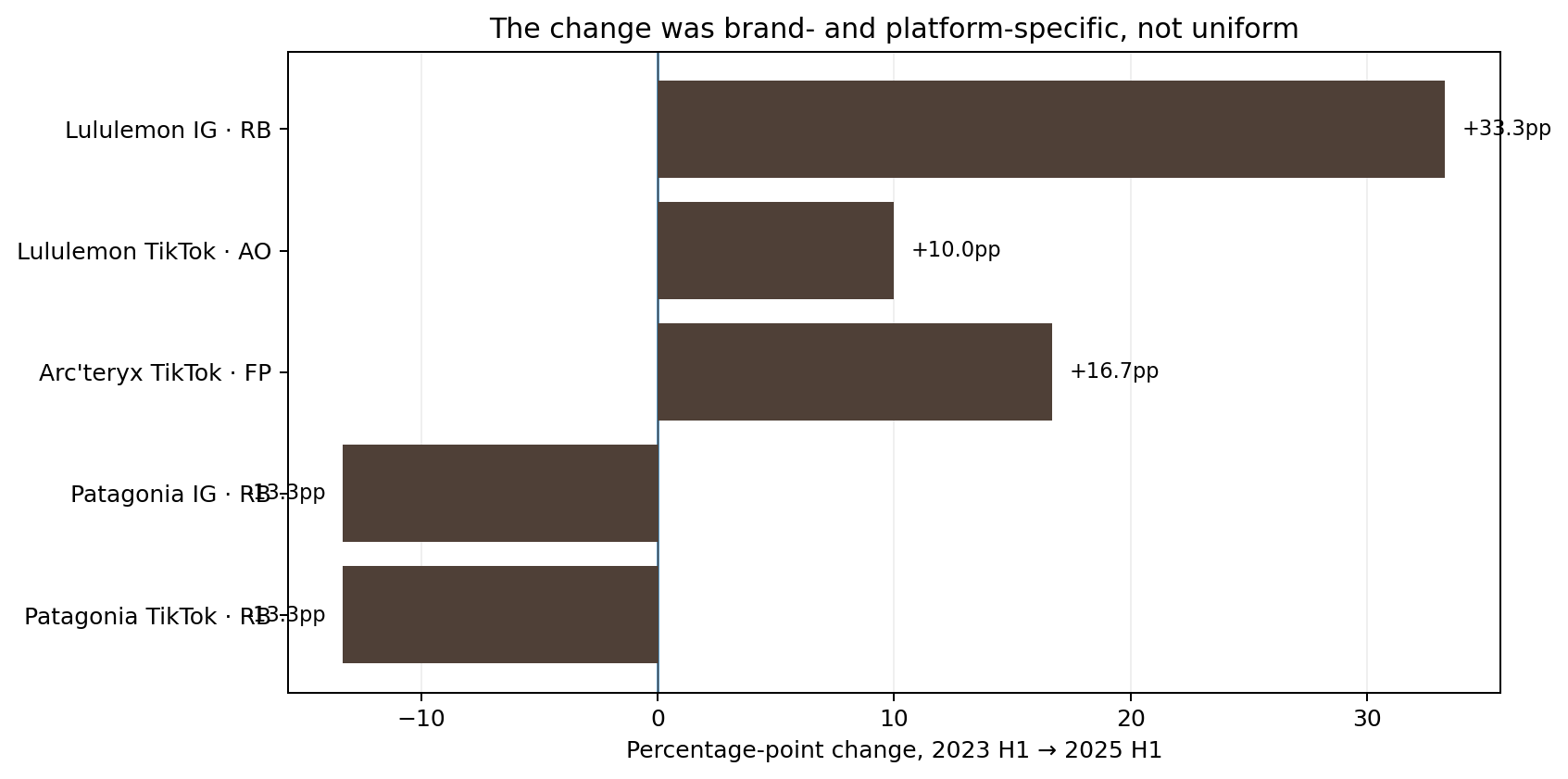
TikTok became more activation-oriented through recurring drops, launch dates and direct purchase cues, while Instagram moved more strongly toward ambassadors, community and identity.
Commercial relevance increased through technical expertise, repair, product performance and education rather than through a strong rise in explicit purchase prompts.
Product visibility increased modestly, but remained embedded in durability, environmental responsibility and mission-led narratives.
Commercial cues work best when they fit the source of value the brand has already established — whether that is community, expertise or mission.
Instagram and TikTok do not need identical content mixes. Platform differentiation can strengthen rather than fragment a brand system.
Product visibility can sit inside community, education or purpose-led content without turning every post into direct-response advertising.
This study identifies patterns in published brand communication rather than managerial intent or consumer response. Brand positioning is therefore used as an interpretive lens, not a tested causal explanation. The sample is bounded to three brands, two platforms and two six-month periods.
Commercial Strategy · Luxury Retail · 2022–23
Kering Eyewear · Distributor Counter Assessment
A compact decision case about evidence, not prestige: the first submission did not meet the entry threshold; the second introduced new information that changed the recommendation.
Kering Eyewear worked with distributor counters across multiple luxury labels. For new locations, the team assessed whether a mall and catchment justified particular brand tiers.
The first Cartier counter application was assessed using mall scale, customer demographics, location, positioning and commercial data. The evidence did not support approval, and the recommendation was to reject.
The client submitted again with new evidence: fit-out, the specific counter location and footfall information. I re-evaluated the case rather than defending the first answer.
The conclusion changed because the evidence changed.
Brand Strategy · Cultural Context
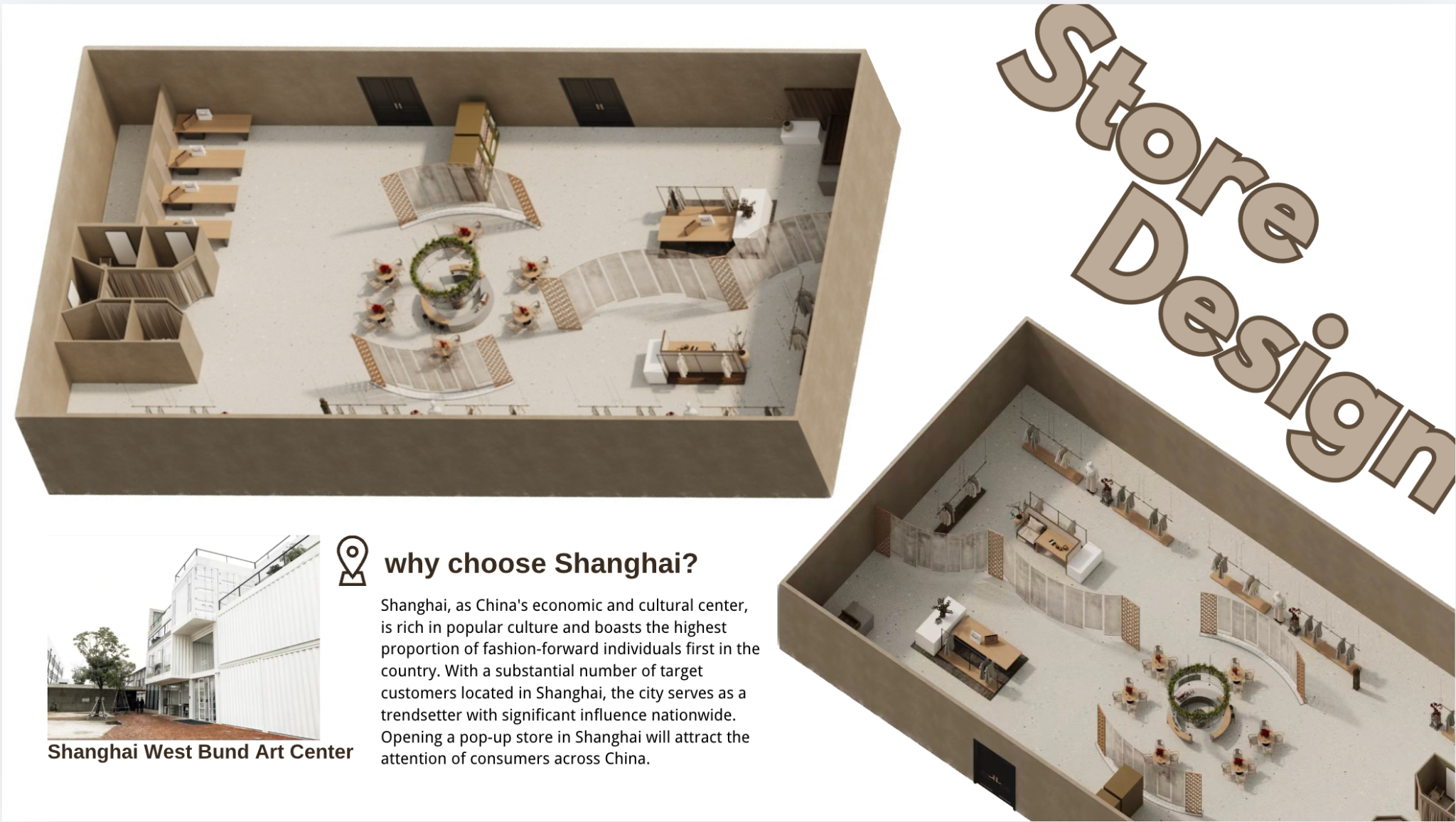
LEMAIRE Shanghai Pop-up Concept
An independent retail concept exploring how LEMAIRE could build greater cultural relevance in China through a shared language of ritual, materiality and pace.

How could LEMAIRE build greater relevance in China without losing the restraint and quietness that define the brand?
The challenge was not simply to add Chinese visual references, but to find a cultural idea that could feel native to both LEMAIRE and the local context.
Tea offered a point of connection through ritual, tactility, materiality and a slower pace of experience — qualities that could sit naturally alongside LEMAIRE’s understated brand language.
Rather than treating tea as a decorative Chinese motif, I used it as the strategic foundation for the retail experience.
Tea was not used as a Chinese motif. It was used as a shared language of ritual, materiality and pace.

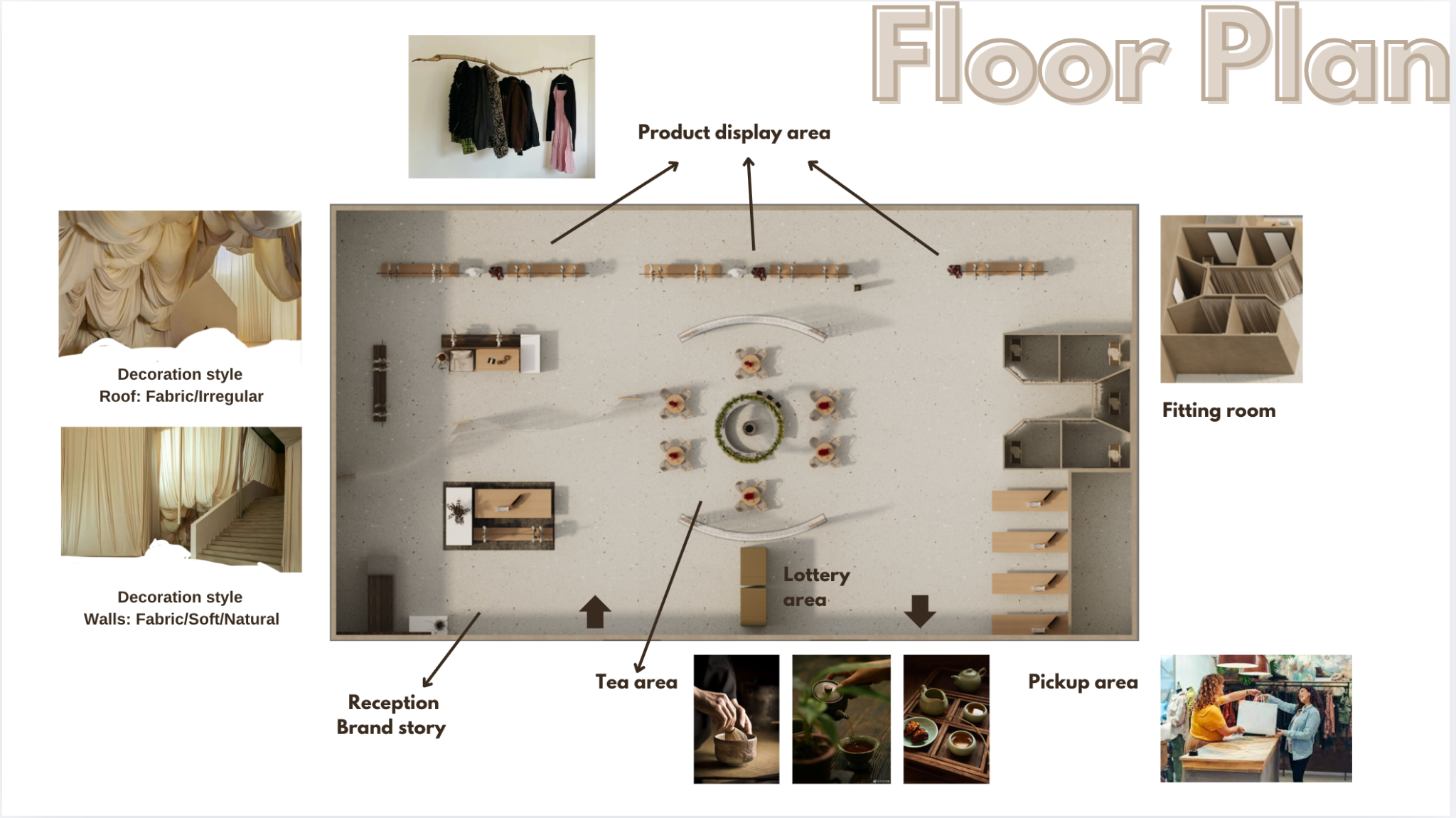
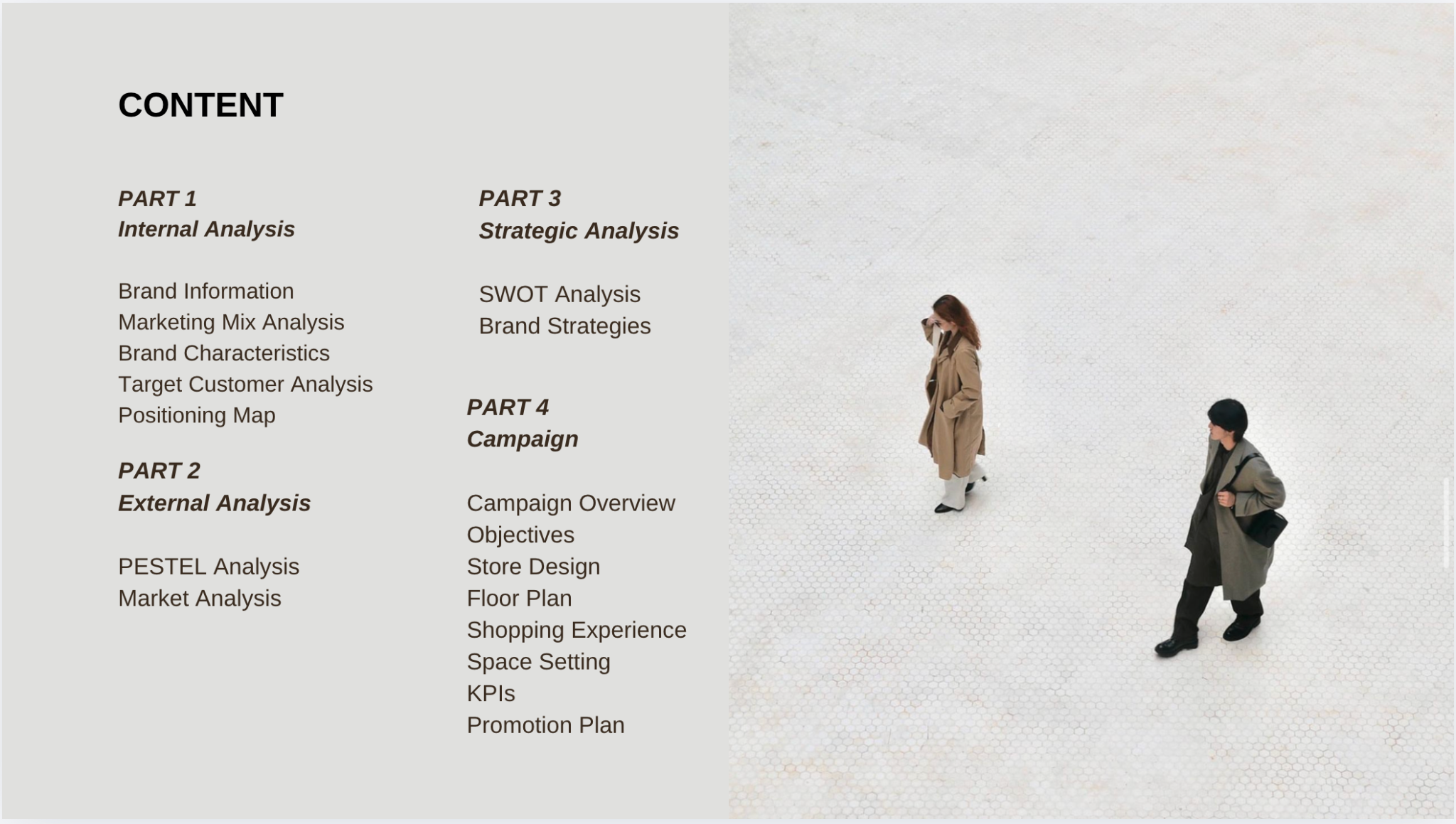
I translated that idea into a Shanghai pop-up concept spanning product display, tea experience, spatial journey and owned-media activation.
The proposed experience was organised around four elements:
Brand storytelling and product displays foregrounding material, craft and process.
A dedicated tea experience introducing a slower, more sensory interaction with the brand.
Product discovery, fitting and pickup designed as one continuous customer flow.
RED, Weibo and WeChat extending the experience beyond the physical space.


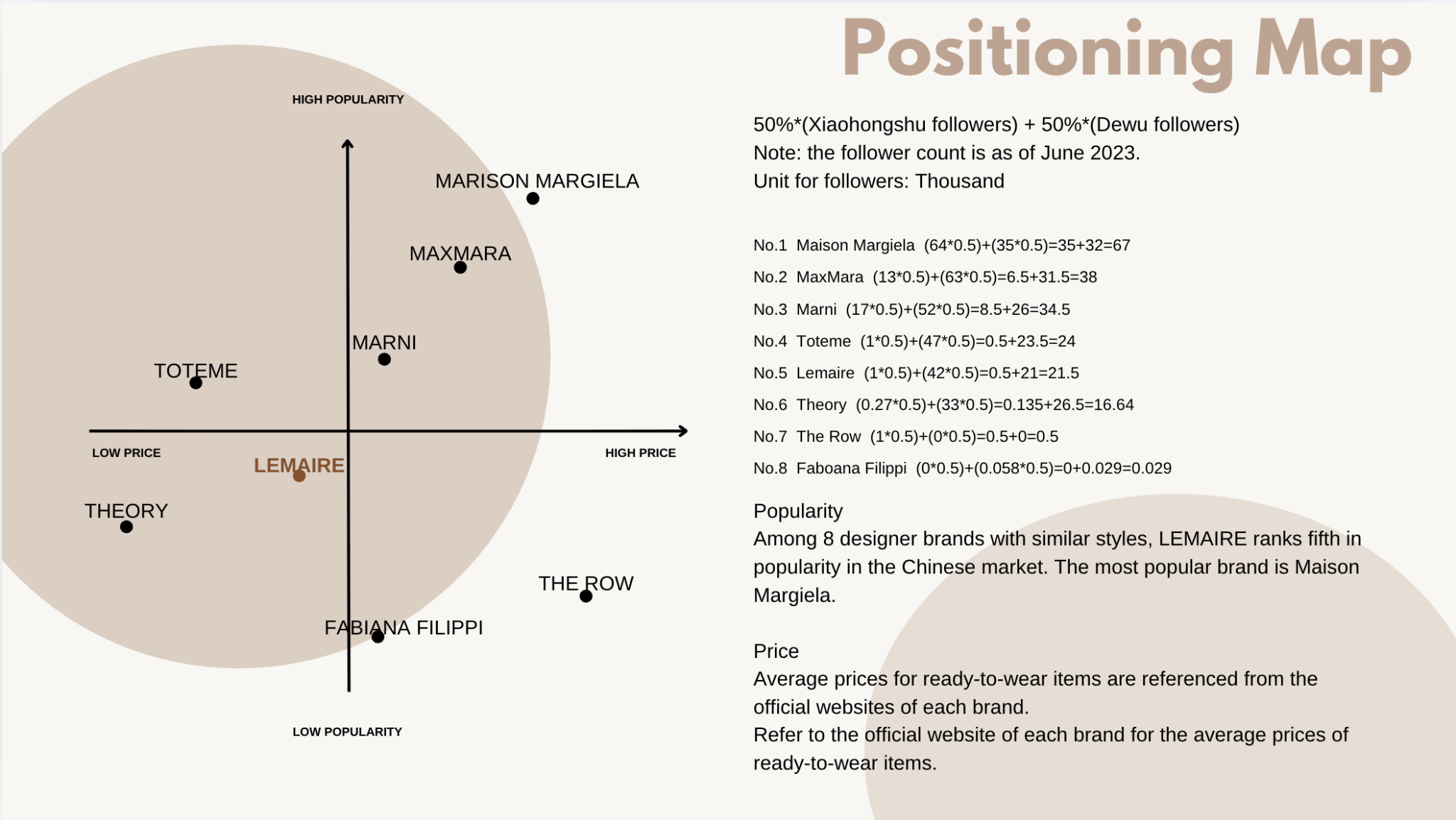
The concept was supported by a competitor positioning exercise comparing LEMAIRE with adjacent designer brands in China across price and popularity.
This helped situate the pop-up within the existing market rather than treating cultural relevance as a purely creative exercise.

Success would be evaluated across four areas:
Cultural adaptation does not have to mean making a brand louder or more obviously local.
The opportunity was to identify where brand identity and cultural context already shared something, then translate that overlap into an experience that could feel locally relevant without becoming unfamiliar to the brand.
Growth Marketing · Creator Strategy
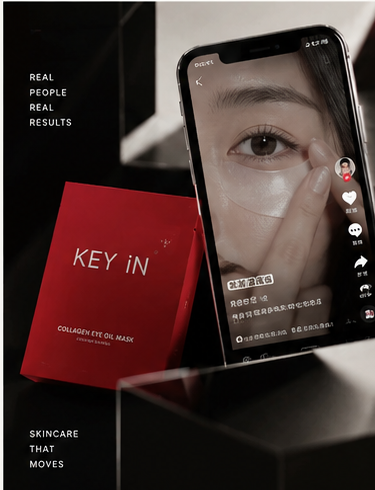
KEY iN · DTC Skincare
I used early organic performance to decide which creator content was worth amplifying — turning sourcing, testing, paid media and sales review into one feedback loop.

Build creator-led demand for a skincare SKU without treating every piece of content as something worth paying to amplify.
The challenge was not simply finding more creators. It was identifying which creator–content combinations showed enough early promise to justify further investment.
Organic performance acted as a decision signal rather than an end metric. Stronger signals could earn amplification; every result fed the next round.
Screened creators using recent sales, skincare relevance and audience fit rather than follower count alone.
Managed outreach, samples, briefing, content review, product-link setup and publication, then observed early organic traction before deciding which creator–content combinations were stronger candidates for amplification.
Reviewed content and sales performance and translated recurring patterns into the next round of creator selection and content guidance.
Real campaign evidence shows the product moving from merchandising into creator-led, shoppable content. These materials establish the commercial context without overstating attribution.
Creator selection, organic response, paid amplification and sales review worked best as one feedback loop: each round created information for the next.
Film
Two field-based films about traditional craft, material culture and the people who keep making knowledge alive.

Documentary · Jingdezhen · Traditional Craft
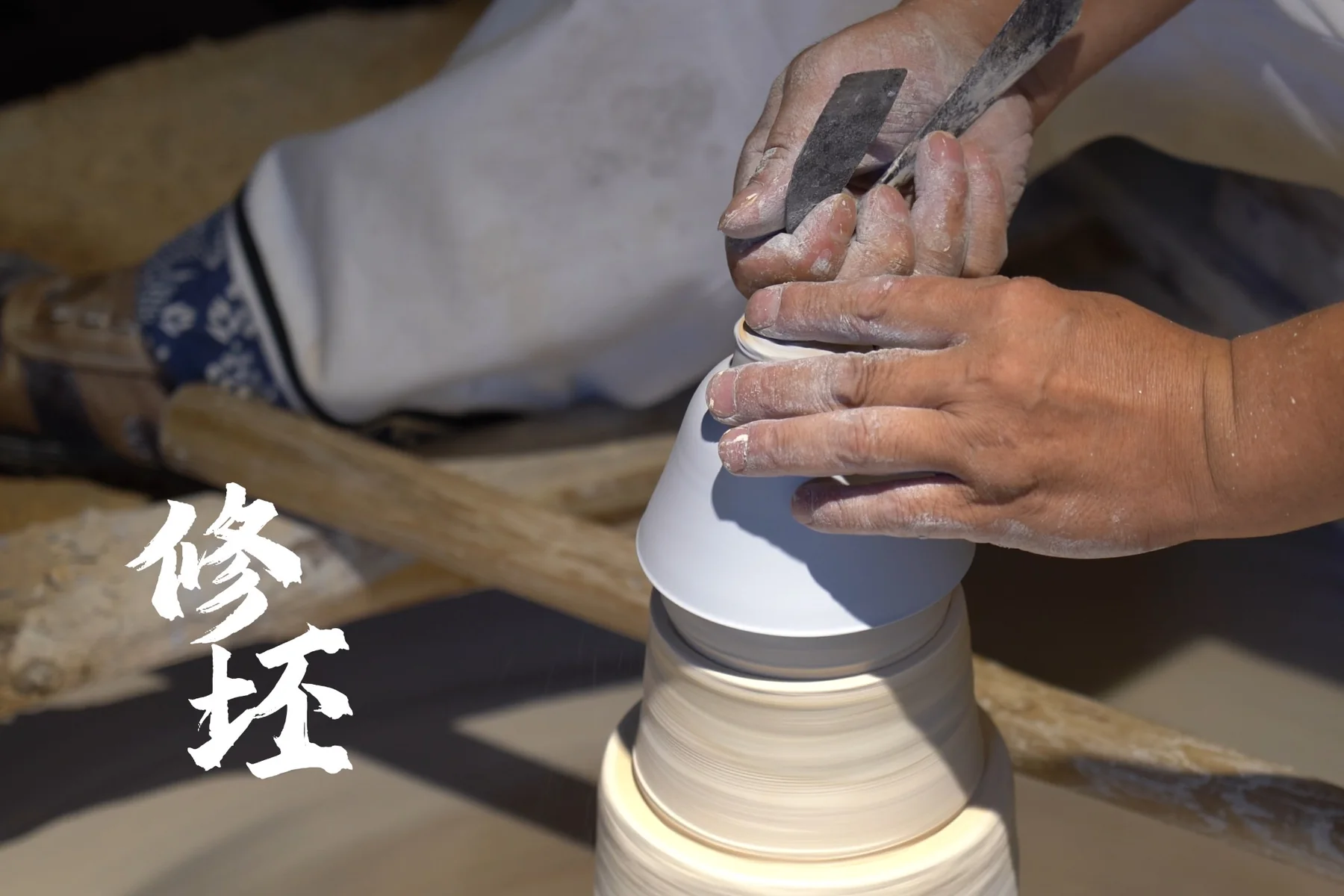
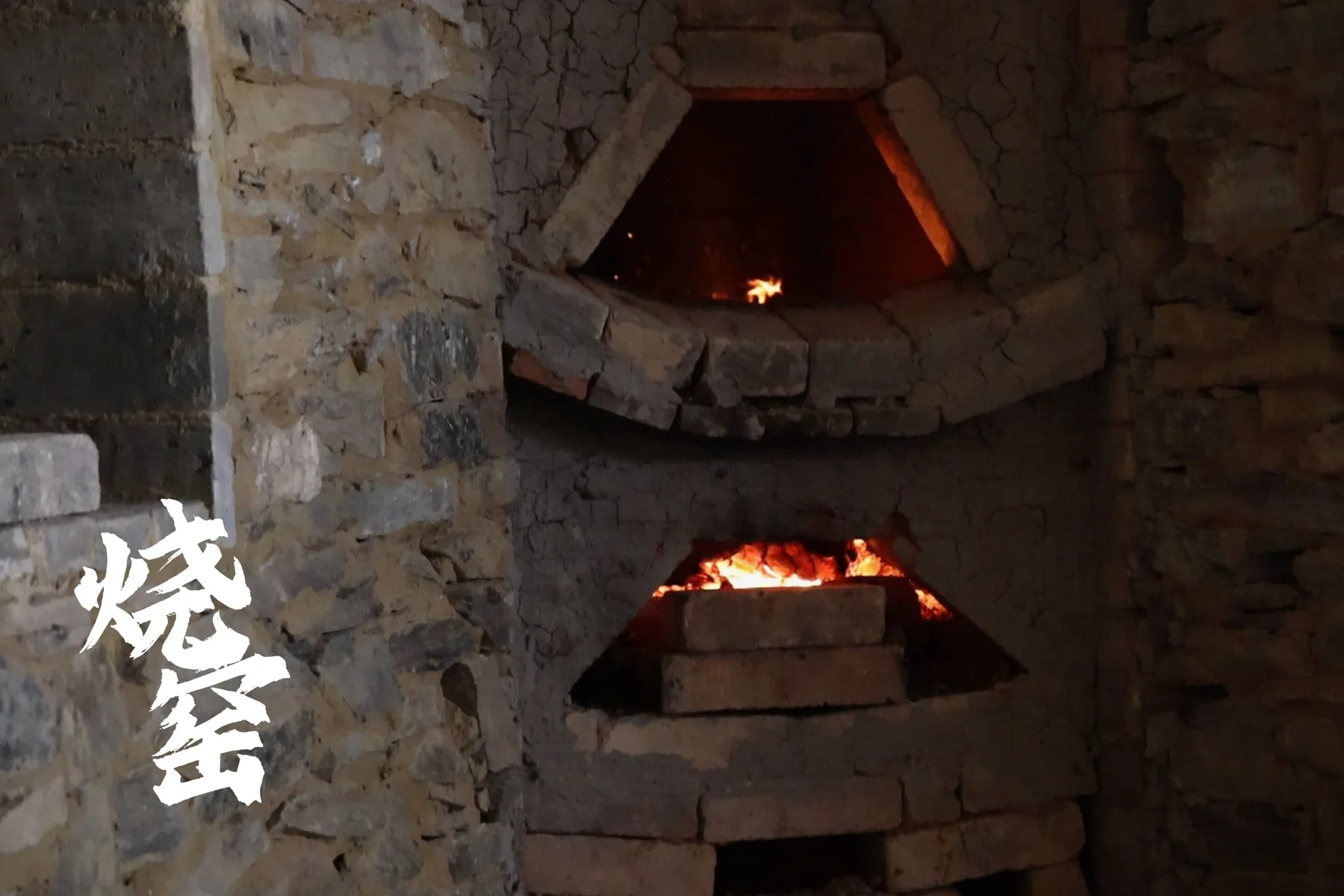
Following Linglong porcelain from throwing and trimming to firing, carving and the play of light that gives the craft its visual identity.
Watch / read → 02
Documentary · Intangible Heritage · Material Culture
Tracing Xuan paper through production, interviews, local context and its life as a cultural medium.
Watch / read →Documentary · Jingdezhen · Traditional Craft
Field research · Filming · Interviews · Editing · approx. 10–13 min
A documentary on Linglong porcelain in Jingdezhen, following the material process from forming and trimming to drying, firing and the pierced details that allow light to pass through the finished porcelain.

How do you make a traditional craft legible without reducing it to a sequence of techniques?
The film combines observational footage, interviews and process detail to connect the physical labour of porcelain-making with the visual quality that defines Linglong porcelain: light passing through carefully worked openings in the ceramic body.
Field shooting followed the craft through multiple stages rather than relying on a single demonstration. The resulting footage gave the edit a material rhythm: hands, rotation, drying, heat, carving and finally the finished object's relationship with light.


The production moved from topic selection and interviews to footage classification, narrative restructuring, supplementary shooting and final editing. The aim was to let process carry information while the interview material supplied history, explanation and human context.
Full documentary hosted on YouTube and embedded here for portfolio viewing.
Documentary · Intangible Heritage · Material Culture
Research · Interview planning · Field filming · Editing · approx. 10–13 min
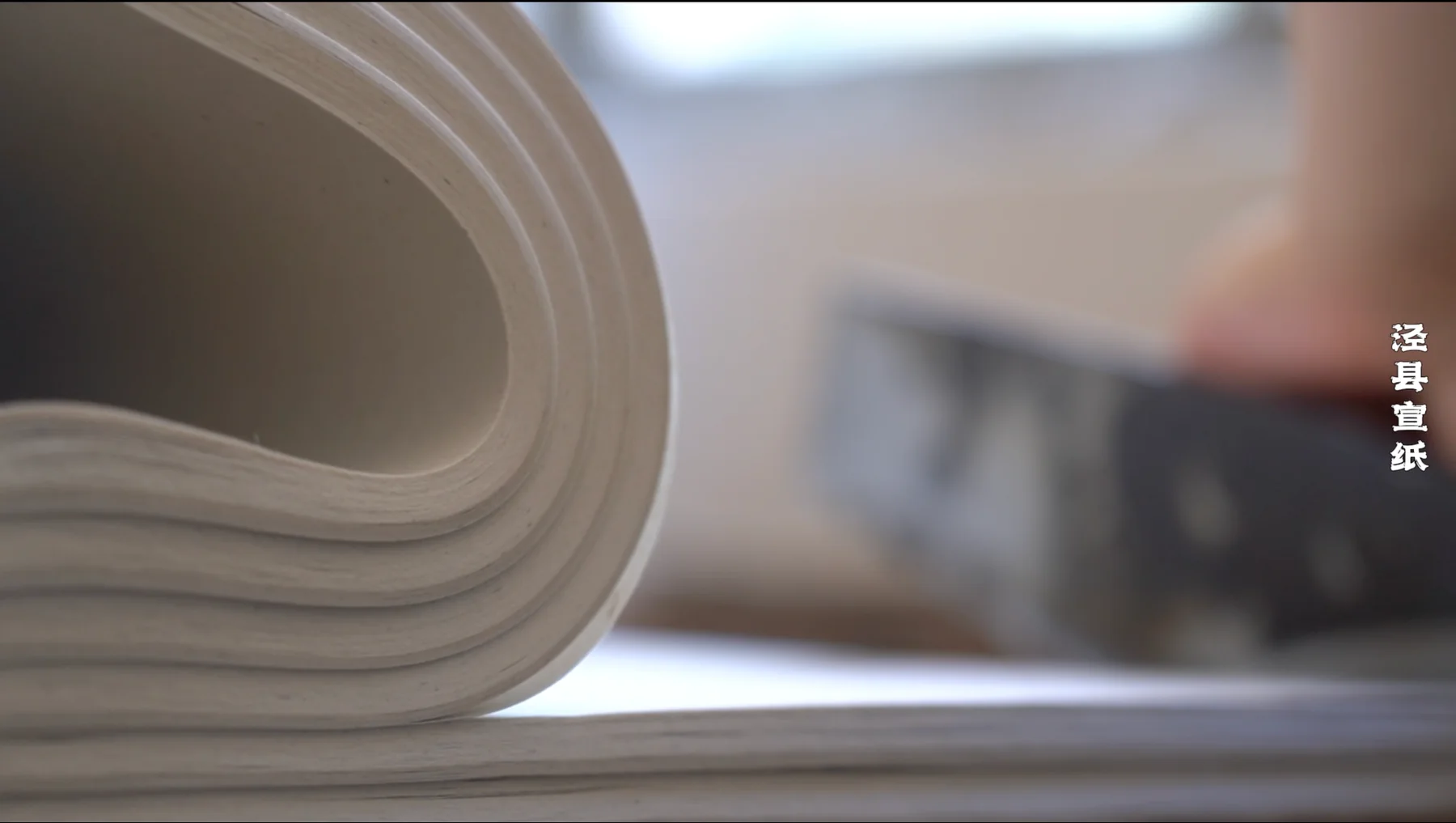
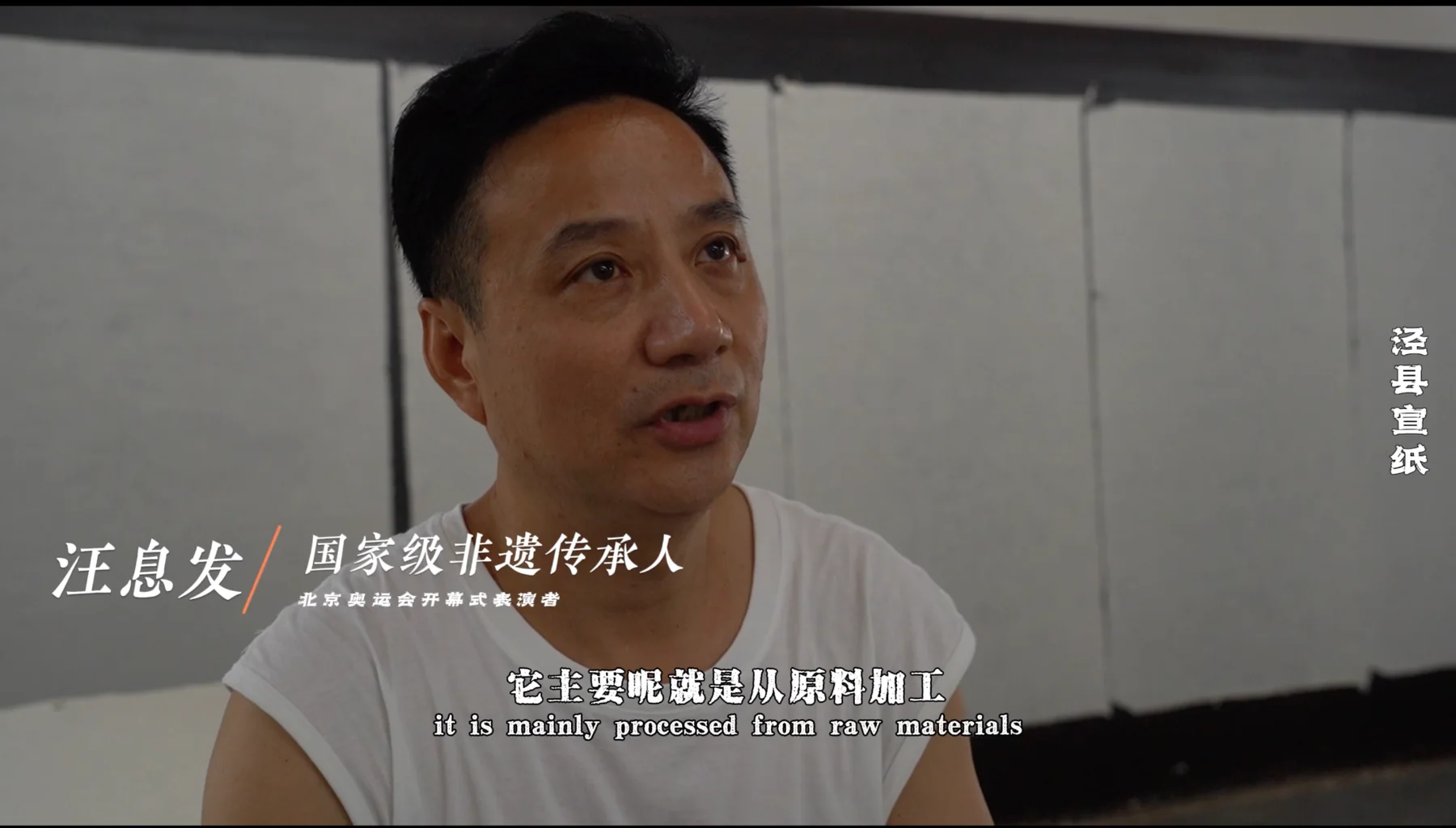
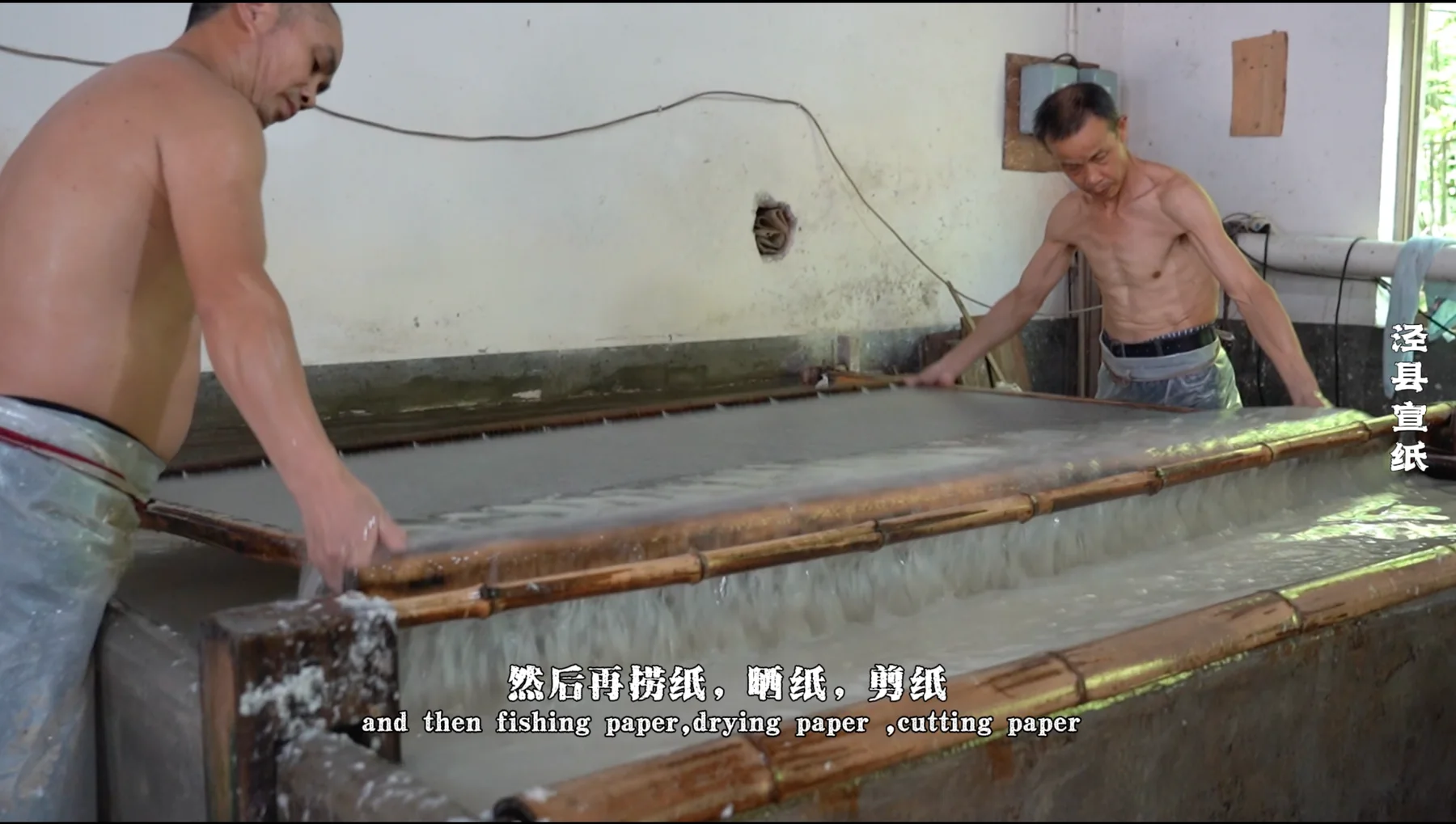
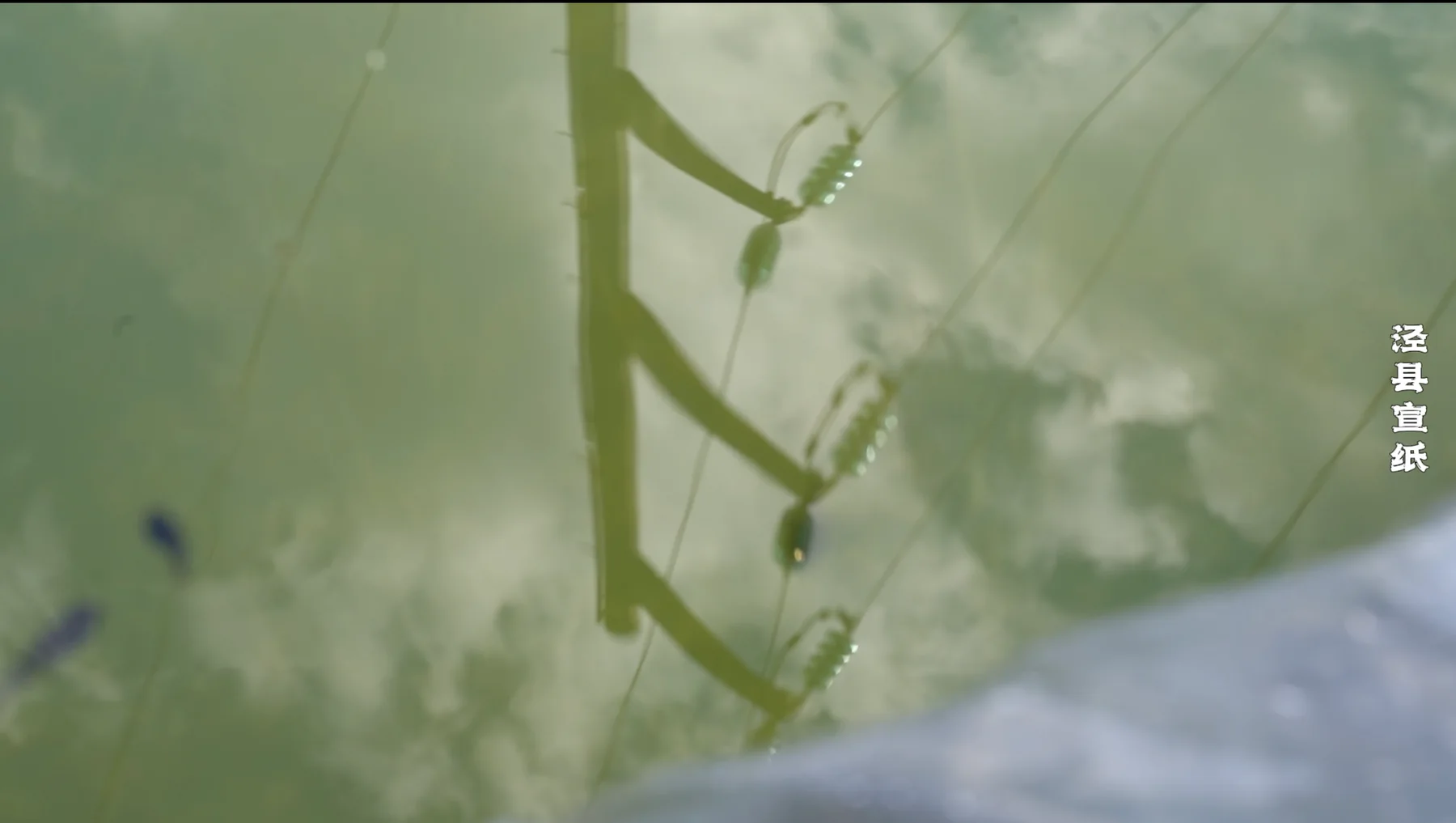
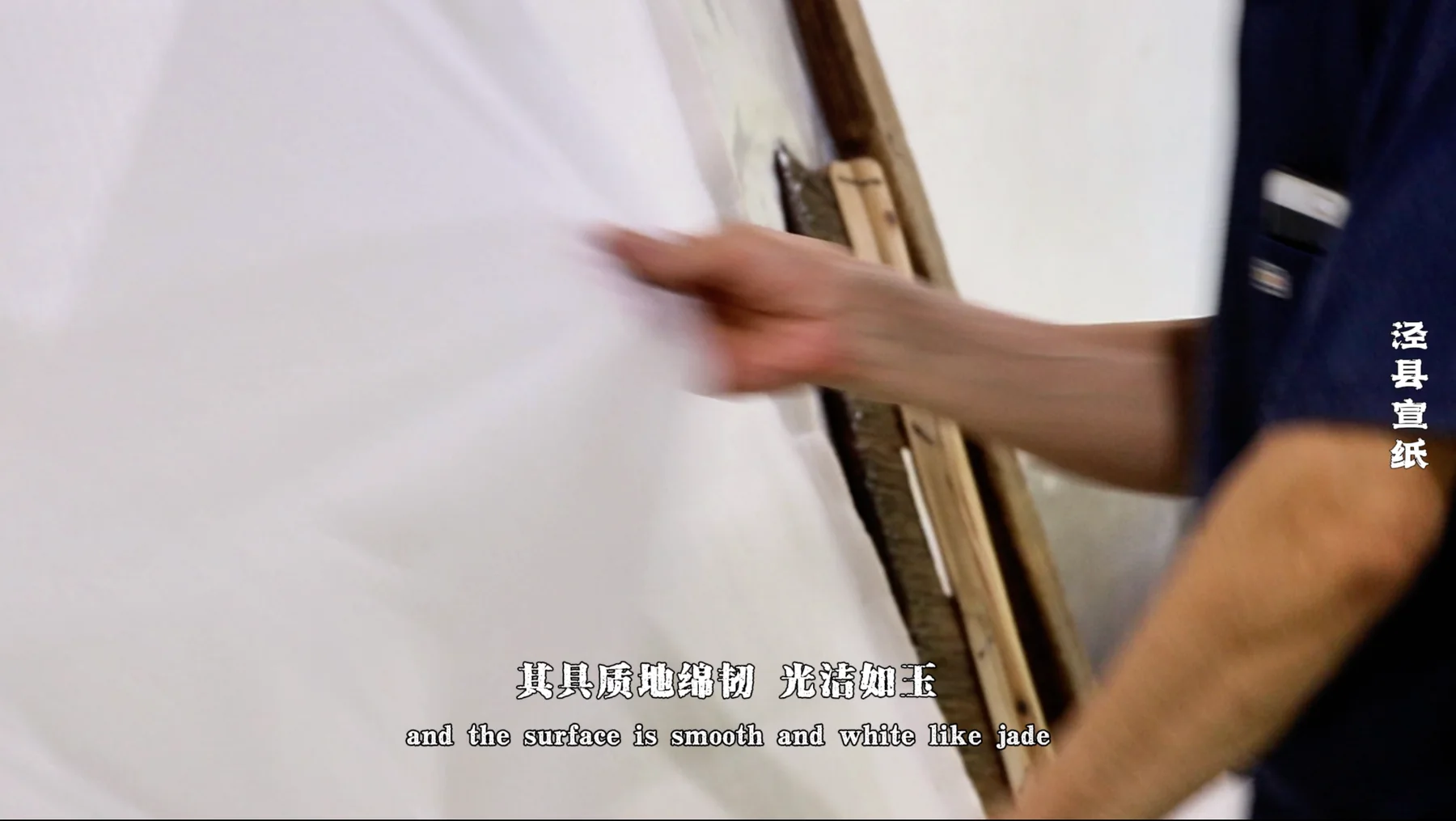
A field documentary tracing Xuan paper in Jing County through handmade production, expert interviews, local context and the transition from raw material to a surface used for writing and painting.

A sheet of paper looks simple. Its making is not.
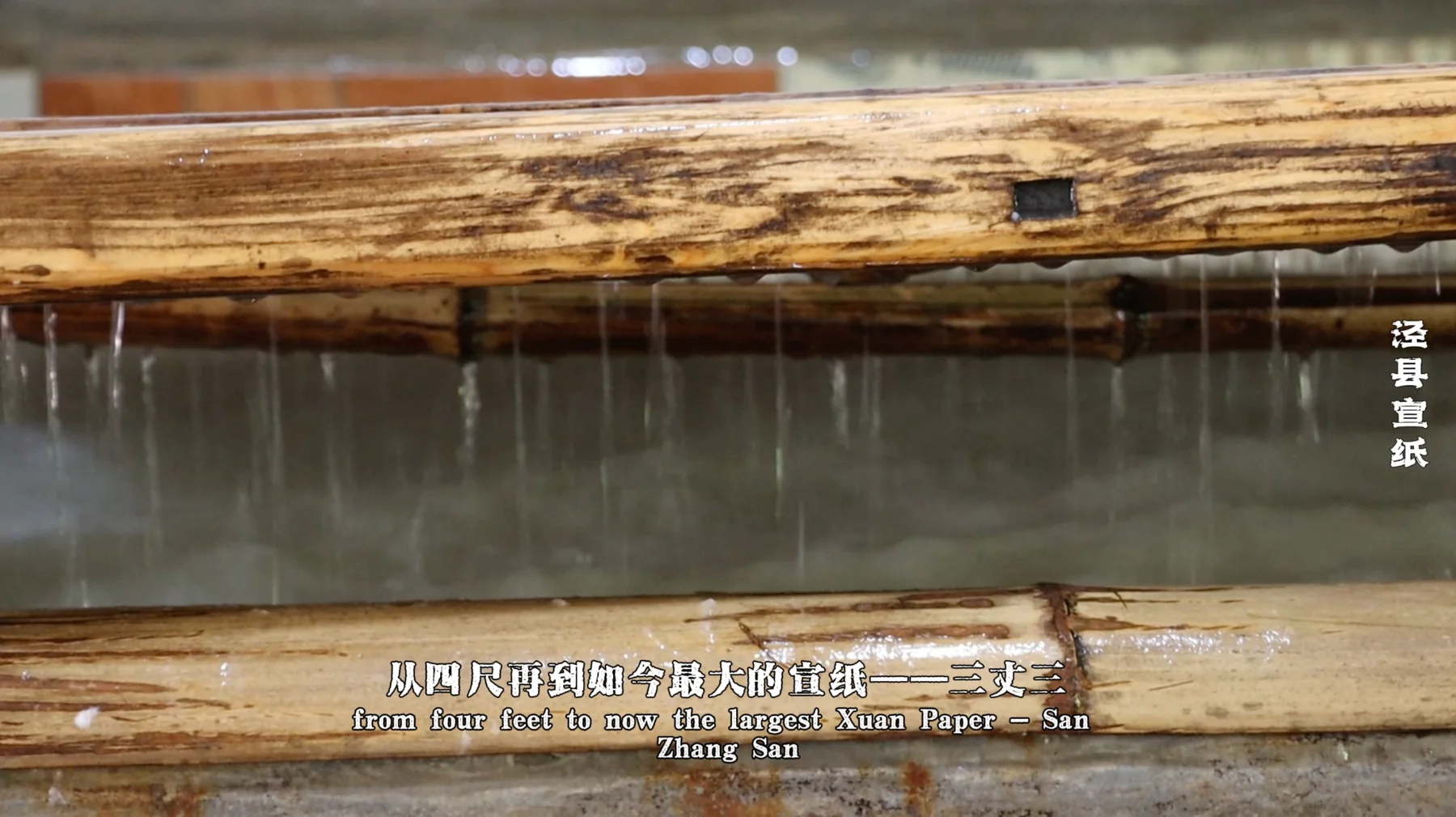
The film follows Xuan paper as both a material and a cultural object: from pulp, water and coordinated handwork to drying, separating, finishing and its later use in calligraphy and painting.
Interviews were used to move beyond a purely procedural film. They supplied historical context, craft knowledge and an explanation of why the process still depends on judgement, coordination and embodied skill.


The production process itself became the film's visual grammar. Repeated gestures, water, scale and the movement of paper through the workshop create continuity between explanatory sections.


The final section shifts from manufacture toward use. Close-ups of paper, brush and surface connect industrially complex production with the quiet visual culture associated with Xuan paper.


Full documentary hosted on YouTube and embedded here for portfolio viewing.
About
I'm interested in the point where evidence becomes a decision: why people respond differently to the same brand, when a piece of content is worth amplifying, how cultural context changes interpretation, and what that means for what a brand should do next.
That has taken me across different kinds of work. I've run creator campaigns for a DTC skincare brand, worked on store-entry decisions in luxury eyewear, studied consumer responses to generative AI, and analysed 344 social posts for my MSc dissertation. Before moving further into marketing, I trained in digital media art, where I worked with documentary film, photography and visual storytelling.
I grew up and studied in China before completing my MSc in Management with Marketing at the University of Glasgow. Working across China and the UK has made me particularly attentive to cultural context — not as a separate specialism, but as one of the things that shapes how people understand brands, products and ideas.
What connects it is simple: I work out what people respond to and why — then turn that into what a brand does next.
【Discipline · Context · Year】
【One-line subtitle: brand, client, or dataset】
【Two or three sentences: what this project was, and what it was trying to figure out or decide.】
【State the core question or decision in one strong sentence.】
【How you approached it — data, method, tools.】
【The headline result and what it means.】
【The decision or recommendation this led to — the part a hiring manager cares about.】